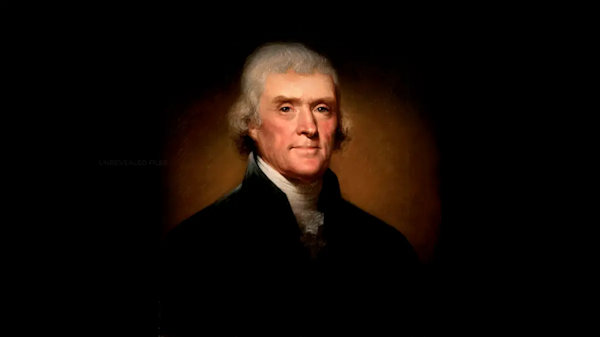
Like many INFPs, Thomas Jefferson was a skilled writer, expert in crafting persuasive language. It was no accident that he was chosen by his peers to draft the language of the US Declaration of Independence.
This is perhaps the most memorable, of many lines in the Declaration where Jefferson’s mastery with language shone brightly.
“We hold these truths to be self-evident that all men are created equal, that they are endowed by their Creator with certain unalienable Rights, that among these are Life, Liberty and the pursuit of Happiness.”
A little factoid of interest. Jefferson’s original draft of the beginning of this memorable phrase began as “We hold these truths to be sacred and undeniable . . .” But Benjamin Franklin edited the last three words (sacred and undeniable) to read “self-evident” which didn’t change the significance of the phrase but altered the association with religious convictions.
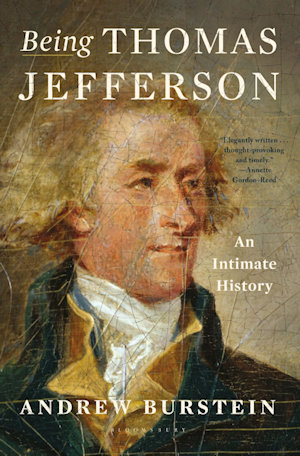
For the reader who is interested in learning more about Jefferson the man, as well as his life history, I recommend a recent book by Andrew Burstein.
Feeling is the Dominant Mental Process of INFP types

More about the INFP personality
In the dynamics of describing the psychological framework of personality types, the principal Jungian mental process of the INFP is the Feeling (F) function. This accounts for the expressive skill possessed by Jefferson (and other INFP types, including Isabel Myers the creator of the Myers-Briggs Personality Indicator and a published novelist). This ability is seen in the emotional flavor of the Declaration of Independence, which is particularly evident in the list of transgressions committed by King of Great Britain.
Among INFP types, the core mental process of Feeling is supported and complimented by the Intuition (N) function. This process is the seat of human creativity and the ability to weave many elements together into a meaningful whole. We see this in Jefferson as he was able to create more than a series of memorable phrases but also knit them together into a powerful and persuasive document like the Declaration of Independence.
The Many Faces of an INFP Personality Type
In my framework of describing the psychological interaction of the four Jungian mental processes, I posit that in INFP types, the processes of Intuition (N) and Thinking (T) are primarily extraverted (E), whereas Feeling (F) and Sensing (S) mental processes govern an INFPs inner world (I).
We see in the wording of the Declaration of Independence, Jefferson’s deeply held impressions of the injustices committed by the King and his officers and administrators. If it was not for his extraverted abilities tied to Intuition and Thinking, his draft would have been a disconnected screed of emotional charges, not the well-crafted document that laid the foundation for the separation of the American Colonies from the jurisdiction of England.
While being a prolific and powerful writer was a centerpiece of who was Thomas Jefferson, he was a polymorph, a man of many other talents and interests. This ability is characteristic of INFP people. They are typically good students in school and have natural affinity for learning new things.
INFP personalities are a common personality type found among people in the architectural profession, where the influence of Intuition and Thinking adds an important component to success. We see this in Jefferson. He invested a good deal of time, energy, and money in creating his Monticello home and the surrounding landscape. His intuitive nature enabled him to attain a depth of understanding of agriculture. His thinking nature powered his crop planting plans and his inventions of machinery and techniques to harvest crops.
While heavily involved in his farming enterprise from a planning and management perspective, Jefferson had little involvement in the actual planting and harvesting of his crops. He was not a hands-on farmer.
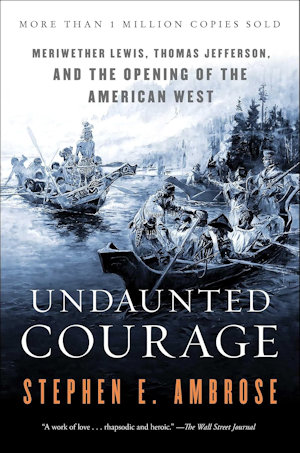
The partnership of Intuition and Thinking can also be seen in Jefferson’s interest in science, geography, and the natural world. He was the architect of Lewis & Clark’s Corps of Discovery Expedition (<Check out this classic book that tells the story of Lewis and Clark’s epic journey through the American West.) that laid the groundwork for the expansion of the United States to the Pacific Ocean.
While he enjoyed vicariously the wilderness exploration and adventure of Lewis & Clark, he never went on any adventures into the wilds himself. Like with his farm he had an intellectual attachment and curiosity, but not a physical one. This is also a typical pattern of INFP types.
Jefferson’s inner self, commanded by his Feeling and Sensing facilities, helps explain his attachment to fine dining and French cuisine. As President, his kitchen was commanded by a chef imported from France and he delighted in entertaining dinner guests with fine food and conversation.
Feeling and Sensing also explain the extensive library of thousands of books. While he read many of them, his collection was so extensive it had to be due to his nature of experiencing pleasure in collecting fine things.
The Sensing-Feeling part of Jefferson’s nature wanted to acquire attractive things and experience being appreciated and admired by others. While his Intuitive-Thinking nature was adept at devising strategies to accomplish what his Sensing-Feeling nature wanted.
Unfortunately, his desire to acquire objects of beauty and worthwhile literature surpassed his ability to pay for them. Jefferson was constantly in debt, spending beyond his means, while using his persuasive skills to obtain credit and keep creditors at bay.
Jefferson, the Lawyer
Like many who hold elected public office, Jefferson’s early occupation was as a lawyer. He was an excellent scholar in law. He much more enjoyed studying law or writing about it as opposed to being a practicing lawyer. An intellectual attachment versus the hands-on practice is another INFP type pattern.
Harmony, an INFP touchstone
Another element that comes to play affecting Jefferson’s lack of interest in law practice is the strong desire of an INFP type for harmony. By nature, they are repulsed by the court room battle ground that occurs in some aspect of law practice.
While being in the political arena certainly can involve a good deal of conflict and thus disharmony. Jefferson was adept at insulating himself from direct involvement in conflict and disputes. In conversation with trusted associates, he would often convey the essence of a grievance or a charge he wanted leveled against an opponent and relied on that associate to actually do the job. Likewise, through the use of letters to associates and to friendly newspaper editors, he persuaded others to wield the sword.
The troublesome aspect of Introverted Feeling and Sensing
Among the traits of Jefferson that historians have found unattractive were his holding onto memory of perceived wrongs committed by others. His Sensing-Feeling nature would experience these things deeply and not forget, nor rarely forgive.
Throughout much of their lives, Jefferson and John Adams were ardent opponents. It is my belief that John Adams was an ISTJ personality type. So, with three of their four letters of their personality types being opposite you can grasp how they would have conflicting perspectives. And because both were Introverted types, they would be likely to hold on tightly to their deeply held, but opposing, perspectives., Fortunately the mellowness of old age caused them to reconcile with one another before their death, which happened to be on the same day: July 4, 1826.
Do you think Thomas Jefferson was an INFP type? Comment below at the end of this article. I’d enjoying learning what you think.
By the way, this is the first of a series of articles I’ve long wanted to write: the Myers-Briggs Personality Types of founding fathers. In case I never get around to it, here’s a list of founders with their Type designations that I’d enjoy writing about:
- George Washington – ESTJ
- Alexander Hamilton – ENTJ
- Benjamin Franklin – ENTP
- James Madion – INTP
- John Adams – ISTJ
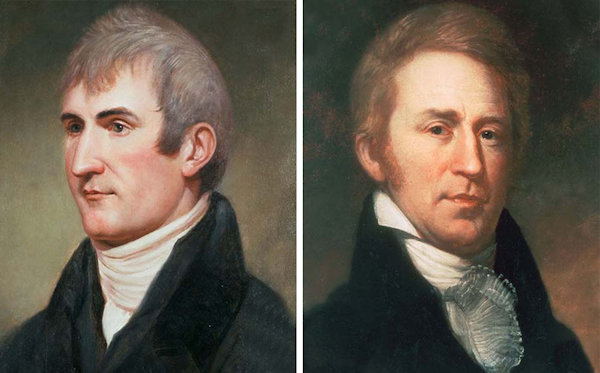
Though not founders, here’s the type designations of two other notable figures in our history that I enjoyed learning about through Steven Ambrose’s exciting account of the Lewis & Clark expedition titled “Undaunted Courage”: Meriweather Lewis – INFJ and William Clark – ESTJ. Partners whose psychological differences complimented one another and rarely became a source of conflict.